Ozone disinfection of oak barrels and casks
Maintaining hygiene and sanitation in wineries is critical to producing high-quality wines. One of the key areas requiring thorough cleaning and disinfection is oak barrels and casks, which are widely used for aging wine. Traditional cleaning methods involve hot water, steam, and chemical sanitizers, but ozone disinfection is emerging as an efficient and eco-friendly alternative. This article explores the benefits, applications, and best practices for using ozone to disinfect oak barrels and casks in cellars and wineries.
The importance of barrel sanitation
Oak barrels are an integral part of winemaking, imparting unique flavors, tannins, and complexity to wine. However, due to their porous nature, they can harbor spoilage microorganisms, including bacteria, yeasts, and molds. Brettanomyces, for example, is a notorious spoilage yeast that can create off-flavors in wine, while Acetobacter can lead to vinegar-like aromas. Ensuring effective sanitation of barrels between uses is essential for preserving wine quality and preventing contamination.
What is ozone and how does it work?
Ozone (O₃) is a powerful oxidizing agent composed of three oxygen atoms. It is highly effective in killing microorganisms by disrupting their cellular structures. Unlike traditional sanitizers, ozone decomposes into oxygen (O₂) after disinfection, leaving no chemical residues. This makes it an environmentally friendly and sustainable alternative to chemical treatments.
Ozone is generated on-site using an ozone generator, which converts oxygen into ozone through electrical discharge or ultraviolet radiation. The ozone gas is then dissolved in water or used in its gaseous form to disinfect barrels, casks, and other winery equipment.
Benefits of ozone disinfection for oak barrels
- Effective microbial control – Ozone effectively eliminates bacteria, yeast, and mold spores that can lead to spoilage and off-flavors in wine.
- Residue-free and Eco-friendly – Unlike chemical sanitizers, ozone breaks down into oxygen without leaving harmful residues, making it safe for the environment and reducing water usage.
- Improved barrel longevity – Harsh chemical treatments and excessive use of hot water can degrade oak barrels over time. Ozone sanitation is gentler, helping to extend the lifespan of expensive barrels.
- Reduced water and energy consumption – Traditional sanitation methods, such as steam and hot water, require significant energy and water. Ozone disinfection reduces the reliance on these resources, leading to cost savings.
- Faster turnaround time – Ozone works quickly, reducing the downtime between barrel uses and increasing operational efficiency in wineries.
Methods of ozone disinfection for oak barrels
Ozone can be applied in different ways depending on the winery’s setup and needs. The two primary methods include:
1. Ozonated water rinse
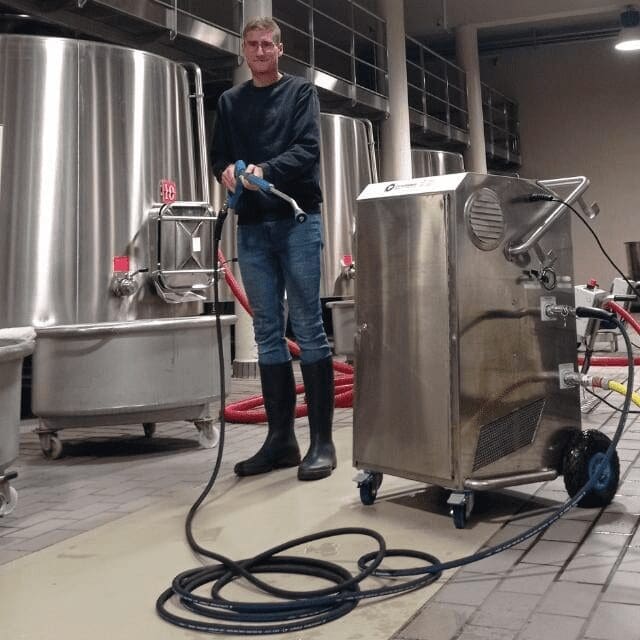
This method involves circulating ozonated water through the barrel. The process typically follows these steps:
- Rinse the barrel with water to remove debris and wine residues.
- Fill the barrel with ozonated water or use a spray wand to distribute the solution inside.
- Let the ozone act for a few minutes (typically 5-10 minutes) to ensure effective microbial control.
- Drain and allow the barrel to dry before reuse.
2. Ozone gas treatment
In this approach, ozone gas is introduced into empty barrels for disinfection. The process includes:
- Draining and drying the barrel after its previous use.
- Connecting an ozone generator to the barrel and allowing gaseous ozone to circulate inside.
- Letting the ozone remain in the barrel for 10-20 minutes, depending on the level of contamination.
- Ventilating the barrel to remove any residual ozone before use.
Best practices for ozone barrel disinfection
- Monitor ozone concentration – Ensure the correct ozone concentration is used for effective disinfection without damaging the barrel.
- Use proper equipment – Invest in high-quality ozone generators and application systems tailored for wineries.
- Combine with other cleaning methods – Ozone works best when combined with initial water rinses to remove organic residues.
- Regularly test barrels – Conduct microbial analysis to confirm sanitation effectiveness and adjust ozone treatment as needed.
- Train winery staff – Proper training on ozone use and safety is essential for effective and safe application.
Ozone disinfection is a highly effective, sustainable, and cost-efficient method for sanitizing oak barrels and casks in wineries. By integrating ozone technology into their sanitation protocols, wineries can enhance wine quality, prolong barrel life, and reduce water and energy consumption. As the industry continues to embrace environmentally friendly solutions, ozone sanitation stands out as a valuable tool for modern winemaking practices.